What identity verification requires in Panama
The obligation does not come from a rule about documents: it comes from the regime for preventing money laundering and terrorist financing requiring that the customer be known before they are allowed to transact, and from the supervision that reviews afterwards how it was done. For banking institutions that review falls to the Superintendencia de Bancos de Panamá; non-financial obligated parties answer to the Intendencia de Supervisión y Regulación de Sujetos no Financieros. Verifying identity is the first link in that duty, and the one that produces the evidence on which all the others rest.
In Panama the document is the cédula de identidad personal and the body that issues it is the Tribunal Electoral. That distinction sets the quality ceiling of any verification: the document is a printed claim, and the Tribunal Electoral's registry is what that claim would be checked against.
Translated into what a process has to settle, these are four distinct checks, and all four have to leave a record.
- That the document is authentic — full reading of the document presented and validation of its security features, not just the number.
- That the person on the document is the one on the other side — biometric matching between the captured face and the one on the document.
- That this person is present and alive — liveness detection, which is what separates a real face from a photo, a recorded video or a synthetic face.
- That the declared data is consistent — cross-checking against the available sources and against the applicable restricted lists.
All four produce evidence. That evidence is the customer file, and the customer file is what the supervisor looks at.
The Panamanian cédulas that are read
Panama has five covered documents, and they all coexist in circulation at the same time. They are grouped into two families, the cédula de identidad personal and the Cédula E, and within each one there are generations that do not offer the same elements to be read.
There is one feature that runs through four of the five: the QR code. It is what sets Panama apart within the coverage, where the QR usually appears only on a country's newest document. Here it is on all of them except the cédula with encryption from 2013 to 2017, which is the oldest of the five.
Cédula with encryption (In force between 2013 and 2017.)
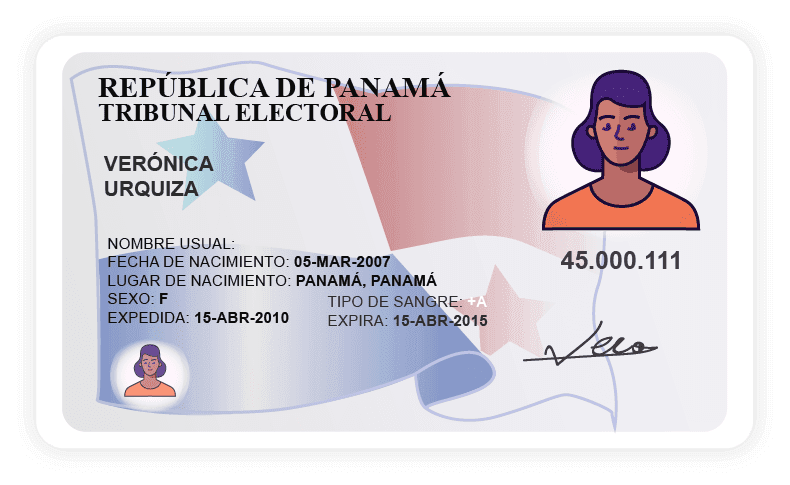
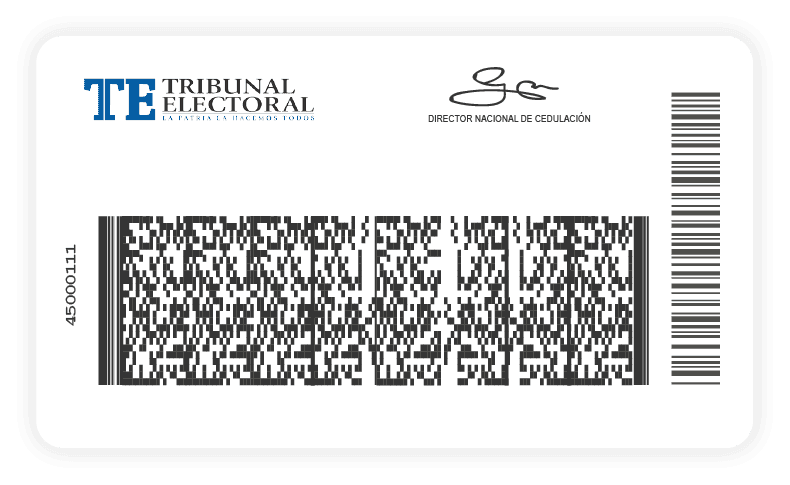
The printed text and the barcode are read. The QR code is not read, as it only appears in the following generation, and it does not carry a machine-readable zone.
The match between the printed data and the barcode is validated. It does not carry a machine-readable zone, so validation cannot rely on an MRZ.
Cédula with encryption and QR (In force since 2017.)
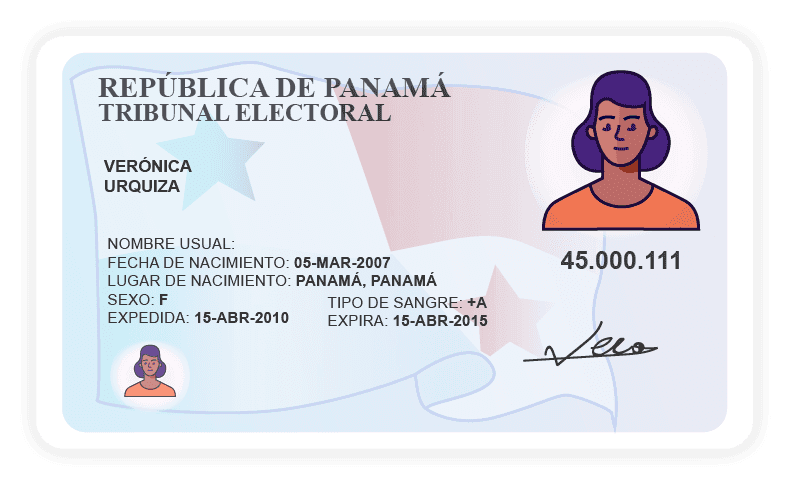
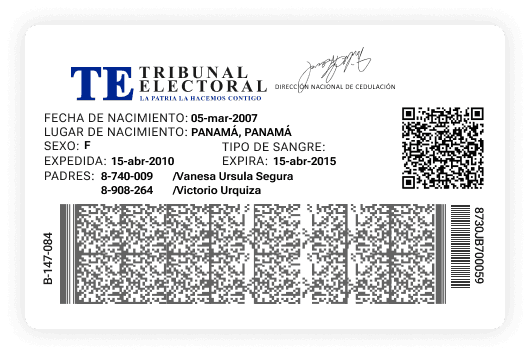
Three readings: printed text, barcode and QR code, which appears from this generation on. It does not carry a machine-readable zone either.
The match between the printed data, the barcode and the QR code is validated. It does not carry a machine-readable zone either.
Cédula with double QR (In force since 2023.)
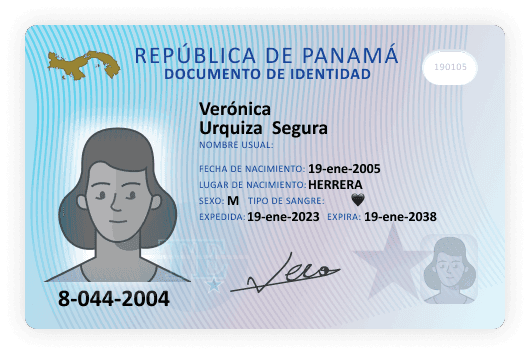
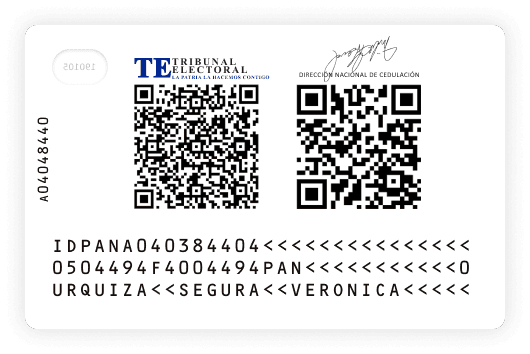
It is the first in the family that adds a machine-readable zone to the three previous readings. Four mechanisms on the same document.
The match between the printed data, the barcode, the QR code and the machine-readable zone is validated, the four mechanisms this version carries.
Cédula E (In force since 2017.)
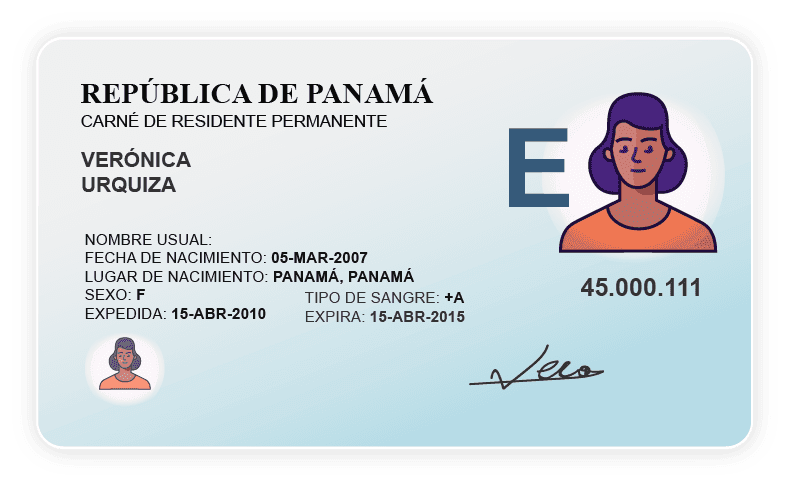
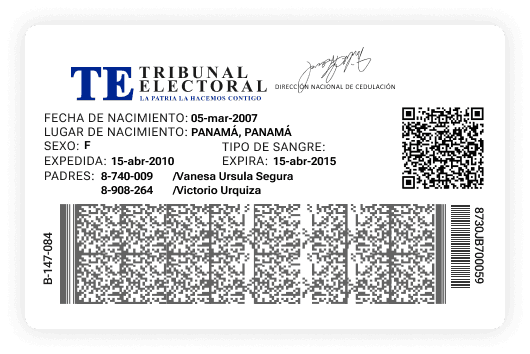
Printed text, barcode and QR code. No machine-readable zone.
The match between the printed data, the barcode and the QR code is validated. It does not carry a machine-readable zone.
Cédula E with double QR (In force since 2023.)
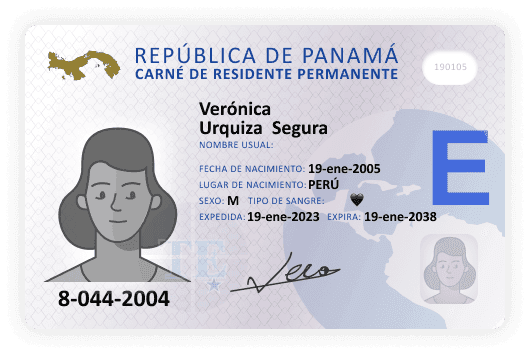
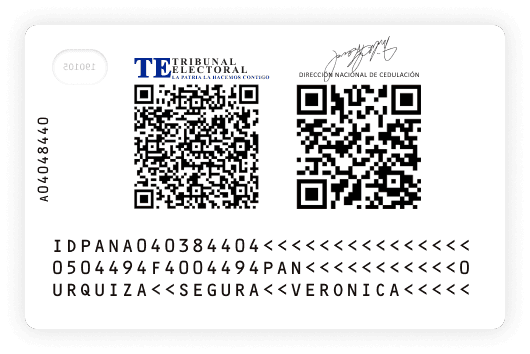
The second of the 2023 issues, and the one that completes the symmetry: it also adds a machine-readable zone to printed text, barcode and QR code.
The match between the printed data, the barcode, the QR code and the machine-readable zone that this 2023 issue adds is validated.
Images are reference templates with fictitious data.
- Cédula with encryption: 2013 to 2017 · Printed text · barcode
- Cédula with encryption and QR: Since 2017 · Printed text · barcode · QR code
- Cédula with double QR: Since 2023 · Printed text · barcode · machine-readable zone · QR code
- Cédula E: Since 2017 · Printed text · barcode · QR code
- Cédula E with double QR: Since 2023 · Printed text · barcode · machine-readable zone · QR code
The progression by generation is the useful part of this table. The two 2023 issues, one from each family, are the only ones that carry a machine-readable zone; the three earlier ones do not have it. Two symmetrical design errors follow from that, and both are paid for in the exception queue:
- A flow that assumes a machine-readable zone on every Panamanian cédula fails with three of the five, which are the three oldest issues and are still in circulation, because a document base is replaced through expiry and not all at once.
- A flow built only on the barcode works with all five and leaves unused what the new generations offer, which is exactly the element designed for automatic reading.
Printed-text reading extracts the visible fields of the document. The barcode and the QR code are two different forms of encoded data on the same card, and the machine-readable zone is the standardized strip of characters that the 2023 issues added. A serious process is designed around the real document base, not around the newest one.
What it is checked against
Checking against the registry of the body that issued the document is a different check from validating what the document shows. The second asks whether the card is consistent with itself; the first asks whether that person exists as declared before the body that registered them. In Panama that body is the Tribunal Electoral.
Within VU's coverage, verification in Panama does not query a government source. Identification relies on reading the document presented and on the biometric matching of the person, with no online check against an official Panamanian registry.
What is not read, and why
Three clarifications that prevent a mistaken expectation.
- Panamanian coverage is cédula, and cédula only. It does not include the Panamanian passport. A flow that receives a passport falls outside this coverage and needs an exception route defined in advance, something that in a market with a non-resident portfolio shows up earlier than in others.
- This page does not characterize who the Cédula E is issued to. The coverage names it that way and does not say which category of person it corresponds to. It is an important piece of information and it is not to be guessed: on it depends whether Panamanian coverage reaches resident foreign nationals, which is precisely what the rest of the countries declare outside coverage.
- Panamanian coverage does not include chip reading.
What VU automates in identity verification
VU handles the mechanical, repeatable part of the four checks, within a single flow.
- Document reading — capture and extraction of the fields according to what each cédula generation supports: printed text, barcode, QR code and, on the newest issues, machine-readable zone.
- Biometric matching — the captured face against the one on the document, with the front and back of the document itself cross-checked.
- Liveness detection — to establish that there is a real, present person at the moment of capture.
- Orchestration of the steps — the order, retries, timeouts and what to do when a step does not complete, which is where a digital sign-up breaks down in practice.
- Trail of each step — the record of what ran, with what result and when, which is what gets shown later.
And what VU does not do, which matters just as much:
- It does not decide whether a person is acceptable. That is the obligated party's risk policy, and the law requires it of them, not of their provider.
- It does not issue or correct documents. That belongs to the Tribunal Electoral. If a piece of data in the registry is wrong, the verification will reflect that error, not fix it.
- It does not interpret the law or assemble the regulatory customer file. VU produces evidence; what is retained, for how long and in what format is defined by the regime and decided by the compliance team.
- It does not verify documents outside the country's coverage. A foreign passport in a Panamanian flow needs another route.
- It does not do transaction monitoring. Verification establishes who someone is at sign-up. What that person does afterwards is another control and another page.
Use cases in Panama
Where this problem shows up in the real operation of the Panamanian market.
Onboarding of non-resident customers. The weight of the international banking and services center means that part of the portfolio arrives with a document that is not a Panamanian cédula, and the automatic flow needs a route planned for that from the design stage.
Five generations of cédula coexisting. A flow built on the newest generation starts accumulating manual exceptions with the earlier ones, and the cost shows up in the support team before the compliance team.
Opening accounts and wallets through digital channels. Remote sign-up is now an ordinary channel, and with it identification went from an employee looking at a document to a process that has to prove itself.
Non-financial obligated parties. They share the obligation to identify with banks and not their scale or their budget, so the question is not what to buy but how much process is proportionate.
Updating the files of customers onboarded in person. People signed up when the standard of evidence was different, who have to be verified again without forcing them to go to a branch.
Frequently asked questions
The cédula de identidad personal issued by the Tribunal Electoral, in the generations that are in force at the time of verification. In Panama several coexist at the same time, and a serious process has to account for all the ones it can receive in practice, not just the newest. What changes between generations is not the legal value of the document but which elements it carries to be read automatically. A point specific to the Panamanian market: with a non-resident portfolio, documents outside local coverage can be expected to arrive, and that is settled with an exception route defined in advance and not on the spot.
No. Identity verification establishes that a person is who they claim to be and produces the evidence of that check. KYC is the broader duty the prevention regime requires: besides identifying, it includes understanding the customer's profile, scaling diligence by their risk, keeping the information up to date throughout the relationship and retaining the customer file. Identity verification is the first link in that duty and the one that produces the proof, but a process can verify flawlessly and still fail to comply with KYC.
The Tribunal Electoral is the body that records the identity of people in Panama and issues the cédula de identidad personal, so it is the reference against which an identity is attested in the country. Checking against the issuer's registry is different from validating what the document shows: the first asks whether that person exists as declared, the second only checks that the card is consistent with itself. Within VU's coverage, verification in Panama does not query a government source. What is handled without it is the full reading of the document, the validation of its elements and the biometric matching of the person against the photo, with liveness detection at capture.
It depends on the generation. The five generations covered carry printed text and a barcode. The QR code is read on four of the five: on all of them except the cédula with encryption from 2013 to 2017, which is the oldest. The two most recent issues, one from each cédula family, also add a machine-readable zone. The practical consequence is twofold: a flow that takes the machine-readable zone for granted fails with the earlier generations, and one that only reads the barcode wastes what the new ones added.
An image of the document settles only one of the four checks, and only partly. It makes it possible to read the data, but it says nothing about whether the sender is the holder, whether there is a real person on the other side at that moment, or whether the data is consistent with any source. A process built on a photo sent over a messaging app is the easiest scenario to attack there is: the image can be of a stolen document, a screenshot or a purchased file.